



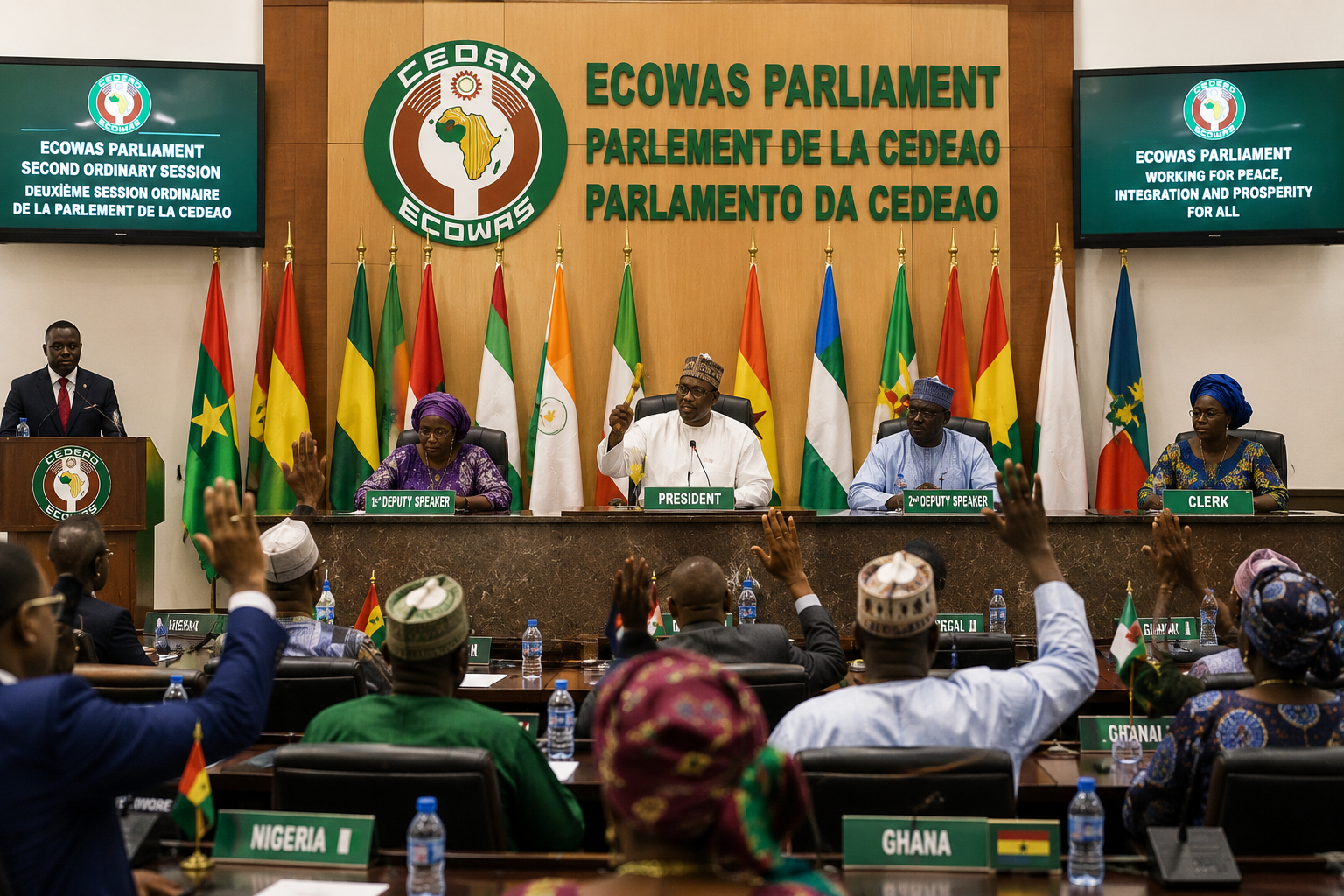
The ECOWAS Parliament has called for stronger support for Micro, Small and Medium Enterprises (MSMEs), urging member states to harmonise customs procedures, taxation policies, import regulations and business registration processes to make cross-border trade easier across West Africa.
The resolutions were adopted at the end of a delocalised meeting of the Parliament’s Committees on Industry and Private Sector, Macroeconomic Policy and Economic Research, Administration, Finance and Budget, and Public Accounts held in Cotonou, Benin Republic.
Presenting the committee’s recommendations on Friday, Co-Chairman Alhagie Darbo stressed the need for the full implementation of ECOWAS trade and investment protocols to eliminate non-tariff barriers, improve regional infrastructure and strengthen monitoring systems that support businesses.

According to him, member states should adopt legal, regulatory and fiscal policies that encourage entrepreneurship, facilitate the formalisation of informal businesses, promote local value addition and improve the competitiveness of MSMEs.
The Parliament also recommended improved governance of markets by ensuring transparent allocation of trading spaces, providing accessible tenancy agreements, reviewing restrictive trading practices and ending the unlawful harassment of traders.
To boost economic participation, lawmakers urged governments to expand financial inclusion initiatives and improve access to affordable credit, particularly for women-owned and youth-led businesses, enabling them to increase productivity and participate more effectively in regional value chains.
The Parliament further called on the ECOWAS Commission to strengthen the implementation of the ECOWAS MSME Development Policy (2021–2030) through enterprise support centres, entrepreneurship programmes, business development services and digital skills training.
It also urged the Commission to establish export support centres along major trade corridors and strategic border posts to assist exporters, simplify compliance procedures and reduce administrative bottlenecks affecting intra-regional trade.
In addition, lawmakers recommended the accelerated harmonisation of ECOWAS product standards, certification systems and quality assurance mechanisms to ensure goods traded across member states meet uniform requirements and gain easier access to regional and continental markets.