






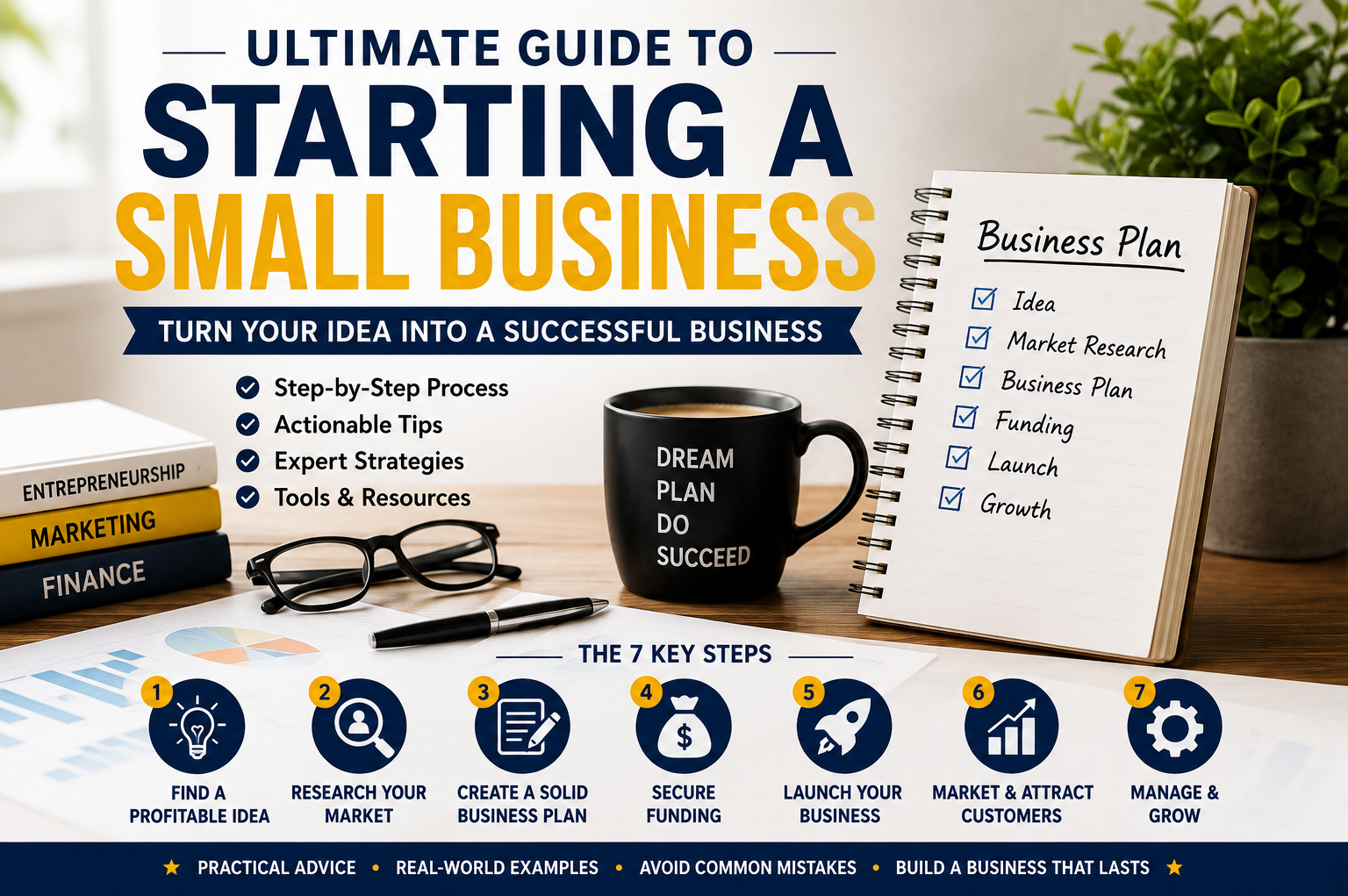
Starting a small business is one of the most rewarding decisions you can make. It gives you the opportunity to become your own boss, create financial freedom, build wealth, and make a positive impact in your community. While launching a business requires careful planning, determination, and continuous learning, the rewards can last a lifetime.
Many of today’s most successful companies began as small businesses with a simple idea and a commitment to solving a problem. Whether you dream of opening a retail store, launching an online business, providing professional services, starting a farm, or building a manufacturing company, success begins with taking the right steps.
This comprehensive guide explains everything you need to know—from choosing the right business idea to growing a profitable company that stands the test of time.
Why Start a Small Business?
Owning a small business offers numerous advantages:
- Financial independence
- Unlimited income potential
- Flexible work schedule
- Opportunity to create jobs
- Personal fulfillment
- Building a valuable brand
- Leaving a lasting legacy
- Greater control over your career
Although entrepreneurship involves risks, careful planning and disciplined execution can greatly improve your chances of long-term success.
Step 1: Choose the Right Business Idea
Every successful business begins with a strong idea. The best ideas solve real problems or meet genuine customer needs.
Ask yourself these questions:
- What skills and experience do I already have?
- What industries are growing?
- What products or services are people searching for?
- Can I improve an existing product or service?
- What problems do customers regularly face?
Examples of profitable business sectors include:
- E-commerce
- Digital marketing
- Agriculture
- Food production
- Real estate
- Import and export
- Commodity trading
- Logistics
- Construction
- Health and wellness
- Information technology
- Education
- Renewable energy
- Financial services
Choose a business that aligns with your strengths, interests, and market demand.
Step 2: Research Your Market
Market research helps you understand your customers and competitors before investing money.
Study:
- Your target audience
- Customer buying habits
- Competitor strengths and weaknesses
- Industry trends
- Pricing strategies
- Market size
- Customer pain points
Good research reduces risk and helps you identify opportunities others may overlook.
Step 3: Define Your Target Customer
Not everyone is your customer.
Create a clear customer profile by identifying:
- Age group
- Gender (where relevant)
- Income level
- Occupation
- Location
- Interests
- Buying behavior
- Common challenges
Understanding your audience allows you to create products and marketing messages that resonate with them.
Step 4: Write a Business Plan
A business plan is the foundation of your business. It provides direction and helps you make informed decisions.
Your business plan should include:
Executive Summary
A brief overview of your business and goals.
Business Description
Explain what your company does and the value it provides.
Products and Services
Describe what you will sell and how it benefits customers.
Market Analysis
Summarize your research on customers, competitors, and industry trends.
Marketing Strategy
Explain how you will attract and retain customers.
Operational Plan
Describe how your business will operate daily.
Financial Plan
Include:
- Startup costs
- Revenue projections
- Operating expenses
- Profit forecasts
- Cash flow estimates
- Break-even analysis
Step 5: Register Your Business
Choose a memorable business name and complete the registrations, licenses, and permits required in your country or region.
Operating legally enhances credibility with customers, suppliers, and financial institutions.
Step 6: Calculate Startup Costs
List every expense before launching.
Typical startup costs include:
- Business registration
- Equipment
- Inventory
- Office or shop rent
- Utilities
- Website development
- Marketing
- Transportation
- Insurance
- Professional services
- Employee wages
Planning ahead helps you avoid unexpected financial pressure.
Step 7: Secure Business Funding
Common funding options include:
- Personal savings
- Family and friends
- Business partners
- Angel investors
- Venture capital (for suitable businesses)
- Bank loans
- Government grants and support programs
Only take on debt you can realistically manage.
Step 8: Build a Strong Brand
A successful brand is built on trust and consistency.
Develop:
- A memorable business name
- A professional logo
- Brand colors and typography
- A clear value proposition
- A consistent tone of voice
- Excellent customer service
A strong brand helps customers remember and recommend your business.
Step 9: Create a Professional Website
Your website is your digital storefront.
Include:
- Homepage
- About Us page
- Products or Services page
- Contact page
- Frequently Asked Questions
- Blog
- Privacy Policy
- Terms and Conditions
Ensure your website loads quickly, works well on mobile devices, and provides a positive user experience.
Step 10: Implement an SEO Strategy
Search Engine Optimization (SEO) helps potential customers discover your business through search engines.
SEO best practices include:
- Target relevant keywords naturally.
- Use descriptive page titles and meta descriptions.
- Create helpful, original content.
- Organize content with clear headings.
- Optimize images with descriptive file names and alt text.
- Improve page speed.
- Use internal links to related content.
- Earn links from reputable websites by publishing valuable resources.
Focus on creating content that answers your audience’s questions better than competing pages.
Step 11: Develop a Marketing Plan
Promote your business using multiple channels:
- Content marketing
- Social media marketing
- Email newsletters
- Local networking
- Partnerships
- Referral programs
- Online advertising (when appropriate)
Track results so you can invest more in the methods that work best.
Step 12: Deliver Outstanding Customer Service
Exceptional customer service builds loyalty and encourages referrals.
Always:
- Respond promptly
- Be honest and transparent
- Resolve complaints professionally
- Ask for feedback
- Continue improving your products and services
Satisfied customers are often your most effective marketers.
Step 13: Manage Your Business Finances
Strong financial management is essential for long-term success.
Keep accurate records of:
- Sales
- Expenses
- Inventory
- Taxes
- Cash flow
- Profits
Review your financial performance regularly and adjust your strategy when needed.
Step 14: Build the Right Team
As your business grows, hire people who share your values and have the skills needed to support your goals.
Provide training, communicate clearly, and create a workplace that encourages accountability and continuous improvement.
Step 15: Measure Your Performance
Monitor key performance indicators (KPIs), such as:
- Revenue growth
- Profit margin
- Customer acquisition
- Customer retention
- Website traffic
- Conversion rate
- Average order value
Measuring results helps you identify strengths and areas for improvement.
Common Mistakes New Entrepreneurs Should Avoid
Many small businesses struggle because they:
- Skip market research
- Ignore customer feedback
- Spend too much too soon
- Underprice products or services
- Neglect marketing
- Fail to manage cash flow
- Try to grow faster than their resources allow
- Resist adapting to market changes
Learning from these mistakes can save both time and money.
Practical Tips for Long-Term Success
Successful entrepreneurs often:
- Set clear goals
- Learn continuously
- Stay organized
- Build strong relationships
- Adapt to change
- Invest in marketing
- Protect their reputation
- Deliver consistent quality
- Reinvest profits wisely
- Stay focused on customer needs
Small, consistent improvements over time can produce significant long-term results.
Conclusion
Starting a small business is a journey that requires preparation, perseverance, and a willingness to learn. While there will be challenges along the way, careful planning and a commitment to serving customers well can help you build a profitable and sustainable business.
Success is rarely achieved overnight. It comes from making informed decisions, managing your finances responsibly, embracing innovation, and continually improving your products, services, and customer experience. Every successful entrepreneur started with a single step—your journey begins today.
Frequently Asked Questions (FAQ)
What is the first step in starting a small business?
The first step is identifying a business idea that solves a real problem and validating it through market research.
How much money do I need to start?
Startup costs vary depending on the type of business. Some online businesses require relatively little capital, while retail or manufacturing businesses often require a larger investment.
Do I need a business plan?
Yes. A business plan provides direction, supports better decision-making, and can be useful when applying for financing or seeking investors.
How can I attract my first customers?
Focus on delivering value, building an online presence, networking within your community, asking for referrals, and creating useful content that answers your audience’s questions.
How long does it take for a business to become profitable?
The timeline varies by industry and business model. Many businesses require months or several years to reach consistent profitability, making patience and disciplined management essential.