






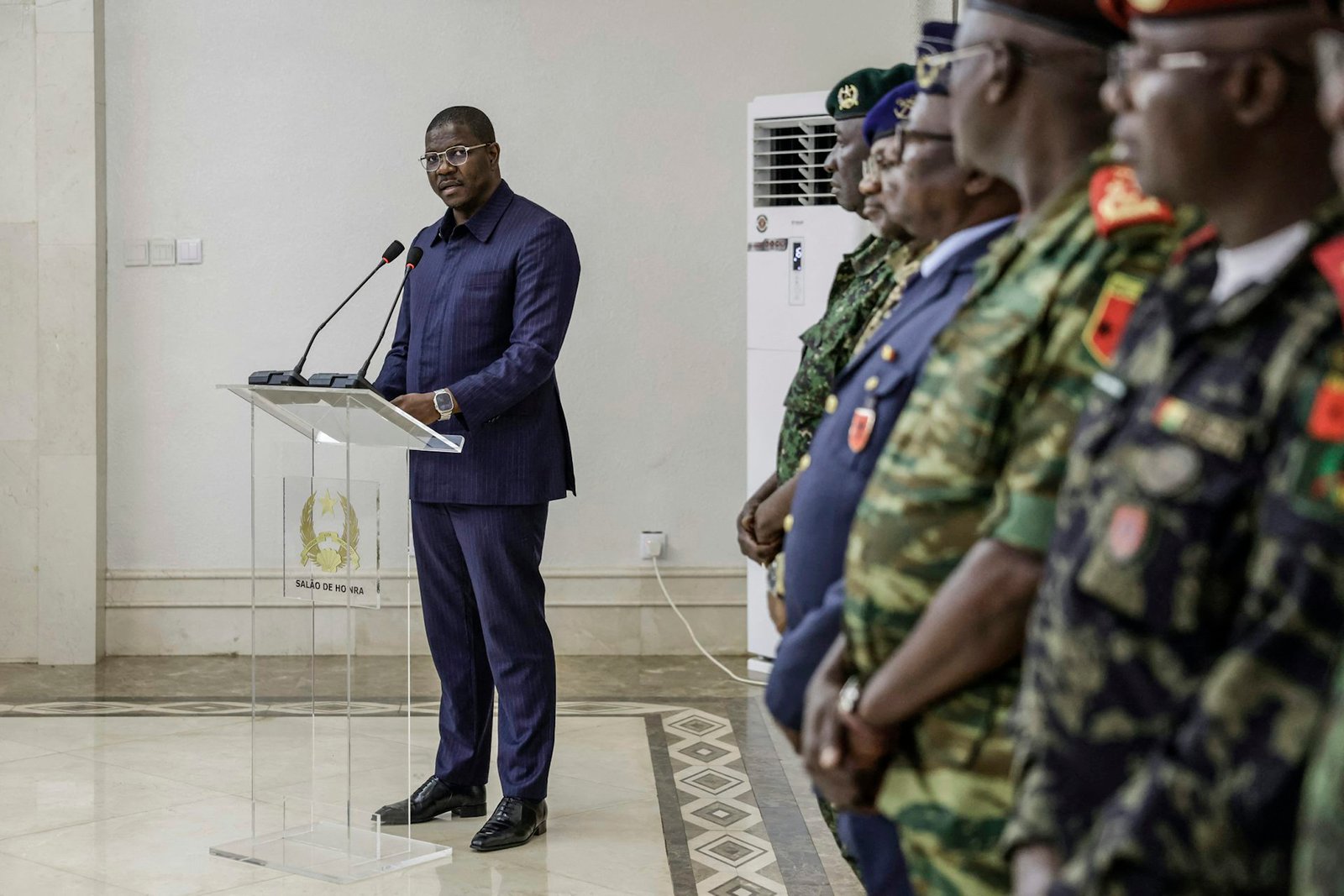
Guinea-Bissau faces growing uncertainty over its planned December elections, as Senegal calls on the country’s military rulers to lift restrictions on political and civil activities and create conditions for a return to democratic governance.
The development follows a warning from Guinea-Bissau’s National Electoral Commission that the necessary conditions for holding presidential and legislative elections as scheduled are not in place.
However, no official announcement has been made postponing the elections.
Senegal, which is mediating on behalf of the Economic Community of West African States (ECOWAS), has stressed that any adjustment to the electoral timetable must follow an inclusive and transparent process.
Dakar has also called for clear guarantees to ensure a return to civilian rule.
Military takeover raises concerns over election timetable
Guinea-Bissau has been under military control since November 2025, when soldiers overthrew President Umaro Sissoco Embaló and suspended the electoral process.
The takeover occurred a day before provisional election results were expected to be announced, deepening uncertainty over the country’s political future.
Since then, concerns have continued over political freedoms, security and the prospects of restoring constitutional government.
The latest warning from the electoral commission has raised further questions about whether the country can hold the elections within the planned timeframe.
Senegal calls for dialogue and restraint
Senegal has urged the military authorities and other political stakeholders to engage in constructive dialogue and exercise restraint amid rising tensions.
The country has emphasised the need to prioritise national interests and establish a credible path towards civilian rule.
As ECOWAS’s mediator, Senegal is seeking a process that addresses the political crisis while preserving transparency and inclusiveness in decisions affecting the electoral calendar.
Regional pressure for civilian rule
The uncertainty surrounding the elections presents a challenge for regional efforts to restore constitutional order in Guinea-Bissau.
The electoral commission’s warning signals that preparations may face significant obstacles, although the scheduled date remains unchanged in the absence of an official postponement announcement.
Attention is now focused on whether the military authorities, political actors and regional mediators can reach an agreement that allows the electoral process to proceed credibly and provides a clear timeline for the return to civilian government.