






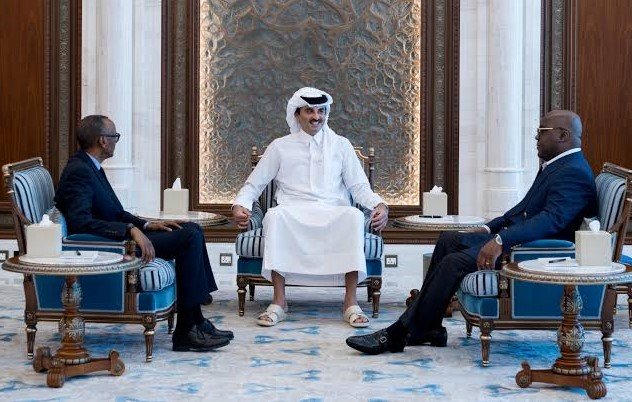
The Democratic Republic of Congo (DRC) and the AFC/M23 rebel movement have agreed on a roadmap for continuing peace negotiations, setting out the next stages and timetable under the Doha peace framework.
The agreement follows five days of talks held in Switzerland from August 17 to 21, as diplomatic efforts seek to regain momentum after months of stalled negotiations and renewed fighting in eastern Congo.
According to a joint statement issued by the Swiss government, the roadmap is designed to establish a sequence of steps and a timetable for negotiations aimed at achieving a comprehensive peace agreement.
Both sides reaffirmed their commitment to resolving the conflict through negotiations and implementing the Doha framework.
Ceasefire Monitoring Takes Centre Stage
One of the key outcomes of the latest discussions was an agreement on a standardised system for reporting alleged violations of the ceasefire.
The measure is intended to improve transparency and rebuild confidence between the parties after repeated accusations of ceasefire breaches.
The parties also agreed to strengthen the MCVE+ ceasefire monitoring mechanism, including the establishment of its secretariat.
The first ceasefire verification mission is scheduled to take place in Minembwe, South Kivu, as part of efforts to assess conditions on the ground and verify reported violations.
The agreement also provides for a mechanism to review progress and identify challenges in implementing commitments made under the Doha framework.
US Welcomes Diplomatic Progress
The United States has welcomed the latest developments, describing them as progress in the Doha peace process.
Massad Boulos, a senior US adviser for Africa and Arab and Middle Eastern affairs, said he was encouraged by the outcome of the meetings held in Switzerland.
“I welcome the additional progress made during the meetings held in Switzerland from 17 to 21 August regarding the continuation of the Doha Framework Agreement,” Boulos said in a statement posted on X.
He reaffirmed Washington’s support for peace and stability in eastern Congo and the wider Great Lakes region.
Boulos also acknowledged the contributions of Qatar, Togo, Switzerland, the African Union Commission and other partners involved in the mediation process.
Analysts Urge Caution
Despite the latest breakthrough, analysts have warned against assuming that the agreement guarantees an immediate end to the conflict.
Political analyst Christian Moleka said the ceasefire monitoring arrangements represented progress but stressed that negotiations remained at an early stage.
According to Moleka, the ceasefire commitments form only part of the first protocol under the Doha framework, while several other protocols remain to be negotiated and signed.
He said the slow pace of negotiations demonstrates the difficulty of reaching a comprehensive settlement, with both sides continuing to protect their political and security interests.
The possibility of renewed fighting also remains a concern if disagreements over implementation are not resolved.
Conflict Continues to Challenge Peace Efforts
The latest agreement comes after months of diplomatic deadlock and continued violence in eastern Congo.
The DRC has accused Rwanda of supporting M23, while Rwanda has repeatedly denied direct responsibility for the group’s actions and has cited security concerns linked to armed groups operating from Congolese territory.
The M23 has captured significant territory in eastern Congo in recent years, intensifying a conflict that has displaced large numbers of civilians and destabilised the wider Great Lakes region.
The Doha process, alongside broader international mediation, is aimed at creating a lasting political solution to the crisis.
For now, the adoption of a clear roadmap represents a step forward for the peace process. However, the implementation of the ceasefire, effective monitoring of violations and progress on the remaining protocols will determine whether the latest diplomatic effort can produce a durable peace in eastern Congo.