


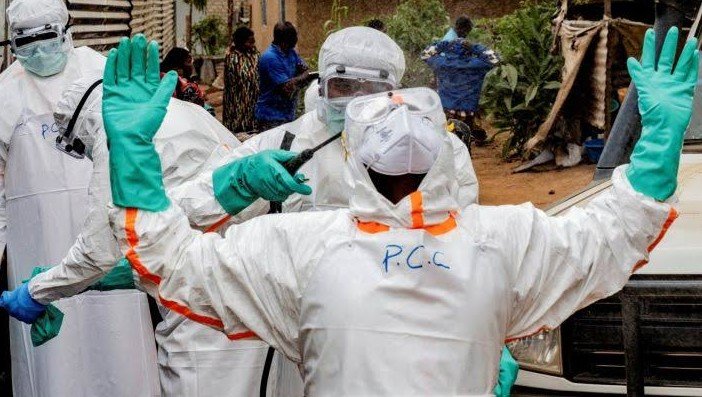
The Democratic Republic of Congo has expanded its vaccination campaign against Ebola to frontline health workers in Bunia, the centre of the country’s ongoing Bundibugyo virus outbreak.
Health workers are being prioritised because of their close contact with patients and their role in treating people infected with the virus.
The campaign is using Ervebo, a vaccine that is licensed and proven effective against Ebola virus disease caused by the Zaire species.

However, scientists do not yet know whether Ervebo can protect people against Bundibugyo virus, which is responsible for the current outbreak.
Health Workers Receive Vaccination
Healthcare worker Nikole Landu said she decided to receive the vaccine because her work places her in regular contact with sick people.
She said the vaccination could reduce her risk of developing severe disease if she becomes infected.
The vaccination programme is being conducted with information about the potential benefits and limitations of the vaccine.
WHO has said there is currently no licensed vaccine specifically approved for Bundibugyo virus disease.
Vaccine Being Studied
The use of Ervebo in the current outbreak is linked to research into whether the vaccine can provide protection against Bundibugyo virus.
WHO said laboratory and animal studies have suggested possible cross-protection, but there is not enough evidence to establish that the vaccine protects humans from the disease.
A clinical trial is therefore being used to gather evidence on its effectiveness.
In August, the International Coordinating Group released 70,000 doses of Ervebo for the DRC.
Of those doses, 50,000 were allocated for frontline and health workers, while 20,000 were designated for a Phase 3 clinical trial.
Ituri Remains the Epicentre
Ituri province remains the worst-affected area of the outbreak.
WHO reported that thousands of confirmed cases and deaths had been recorded in the DRC by early September, with Ituri accounting for the largest share of cases.
The outbreak has also spread to other provinces, including North Kivu, Tshopo, Haut-Uélé and Bas-Uélé.
The response has been complicated by insecurity, population movement and difficulties in reaching affected communities.
No Licensed Bundibugyo Vaccine Yet
Bundibugyo virus is one of several viruses capable of causing Ebola disease.
Unlike Ebola virus disease caused by the Zaire species, there is currently no licensed vaccine specifically for Bundibugyo virus disease.
WHO says research is continuing on vaccines and treatments that could specifically target the virus.
Authorities are combining vaccination research with surveillance, testing, treatment, infection prevention and community engagement as they work to contain the outbreak.