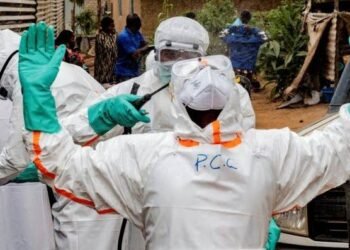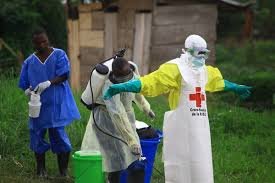



The International Organization for Migration (IOM) is expanding Ebola surveillance beyond the borders of the Democratic Republic of Congo (DRC) as health authorities step up efforts to contain the outbreak.
The organization is strengthening health screening at displacement sites, ports and major travel routes across the country.
According to government figures released on Tuesday, more than 7,700 Ebola cases and over 3,700 deaths have been reported in the DRC.

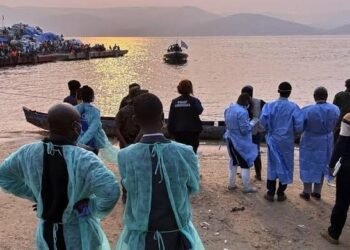
The latest response includes increased monitoring along important movement corridors, including the Congo River, where large numbers of people travel between communities.
Health screening at Kinshasa port
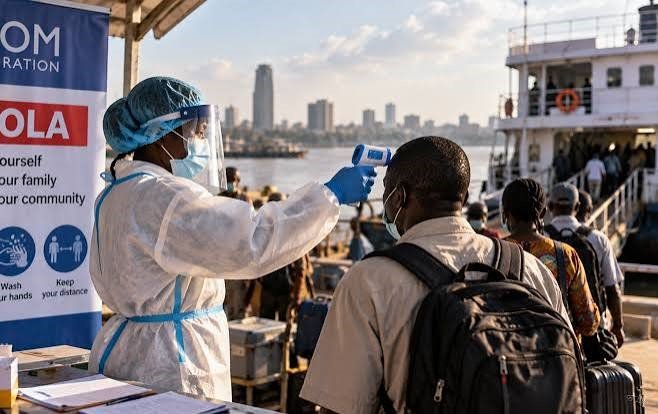
At the Bende-Bende port in Kinshasa, IOM health workers are screening passengers for possible signs of Ebola and other epidemic diseases.
The screening includes temperature checks and the collection of health information through traveller health forms.
The IOM said its teams carry out an average of about 1,000 health screenings every day at the port.
The measures are designed to identify people who may require further medical assessment before they continue their journeys.
Suspected cases sent for testing
Dr. Primous Godjedo, an IOM health security specialist, said passengers who meet the criteria for suspected or alert cases are immediately referred for additional assessment.
“If a passenger meets the definition of a suspected or alert case, they are immediately referred to the sampling unit to determine whether it’s a case of Ebola, another epidemic disease, or cholera.”
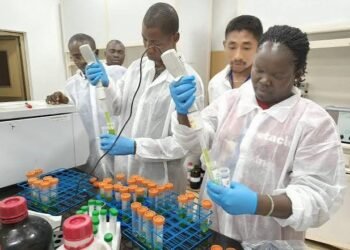
The additional testing is intended to help health workers determine whether symptoms are linked to Ebola or another disease with similar clinical signs.
Neighbouring countries strengthen preparedness
The IOM said its response is also extending to countries bordering the DRC.
The organization is working with Uganda, South Sudan, Burundi, Rwanda and the Central African Republic to strengthen preparedness against possible cross-border transmission.
The cooperation focuses on surveillance and preparedness along major routes used by people travelling between the DRC and neighbouring countries.
Monitoring population movements
The expanded surveillance comes as health authorities continue efforts to contain Ebola and monitor population movements.
Travel routes and displacement sites remain important areas for disease surveillance because people moving between communities can potentially carry infections across geographical boundaries.
The IOM’s work is therefore focused on early identification, referral and coordination with health authorities to reduce the risk of further transmission.