






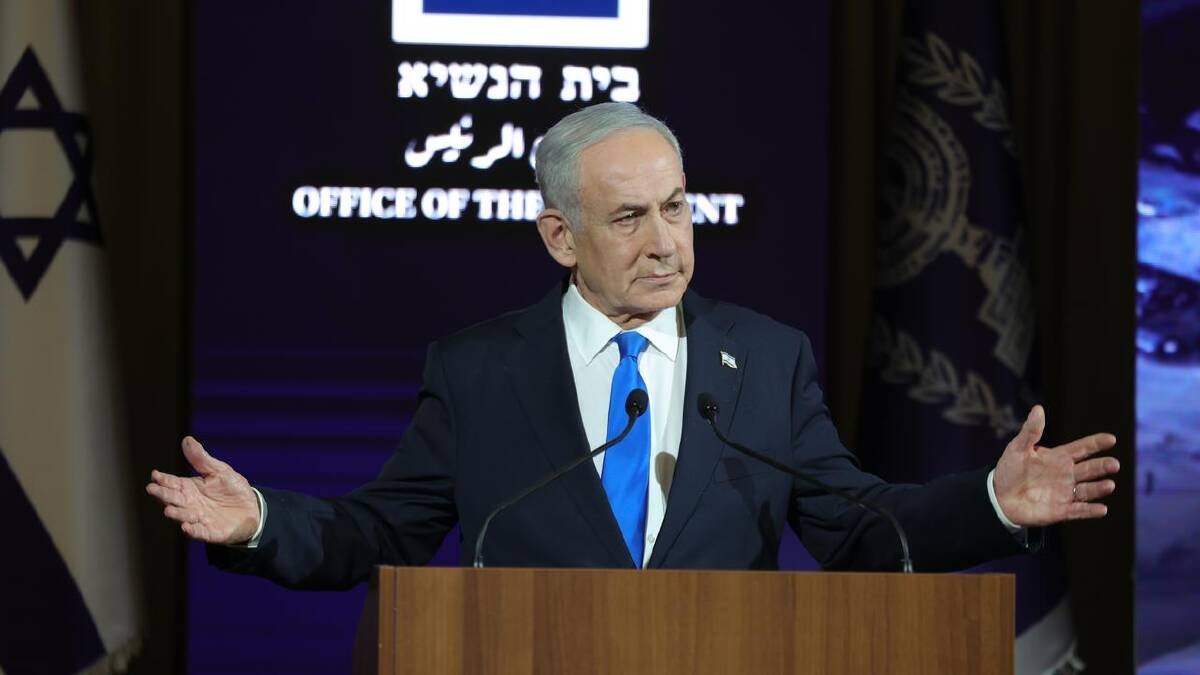
Israeli Prime Minister Benjamin Netanyahu has turned down US President Donald Trump’s proposed 15-point plan for Gaza, stating that a military withdrawal will not take place until Hamas is “truly” disarmed.
In the previous month, Trump’s Board of Peace declared an agreement for the “complete disarmament” of Hamas and other militant groups in Gaza. Nevertheless, Hamas countered by asserting that relinquishing its heavy weaponry is contingent upon Israel ceasing “all forms of aggression” and withdrawing its forces from Gaza.
Although a ceasefire agreement was initially reached in the territory last October, Israel has persisted with strikes on Gaza. During a cabinet meeting on Sunday, Netanyahu emphasized that “Israel rejects the 15-point document.”
Netanyahu stressed that the Israeli military “will not retreat until Hamas is truly disarmed and will persist in addressing threats to our forces and citizens.”
A Hamas official told the BBC that the group is committed to upholding the agreement and ready to implement the 15-point plan seriously and responsibly. They called on mediators to ensure that all parties adhere to the agreed terms.
Israel’s rejection presents an additional obstacle to Trump’s Gaza peace plan, which was introduced in September of the previous year. The plan sought to establish a Board of Peace to oversee its implementation and included objectives like disarming Hamas, withdrawing Israeli troops, and reconstructing Gaza.
Although Netanyahu’s rejection of the plan is not unexpected, it highlights the challenging situation he is in. He appears unhappy with Trump’s proposal but also wants to uphold a strong relationship with his closest ally.
A little more than a week ago, Trump proclaimed what he called a “monumental step toward lasting peace and security,” asserting that Hamas had agreed to disarm for the first time if Israel withdraws its forces from Gaza.
READ ALSO: Israeli PM Holds First White House Talks Since Iran War
On Sunday, Netanyahu emphasized that this would not occur while he is in charge. He asserted that Hamas must disarm beforehand and stressed the importance of a genuine, substantial disarmament rather than just an illusory one.
In practice, disarmament and the withdrawal of Israeli troops would probably need to happen gradually. Netanyahu noted that there are ongoing discussions with US officials about the way forward. “They have suggestions; some align with our views while others do not, and we know how to firmly uphold our positions on these matters,” he stated.
As Israeli elections draw near, Netanyahu is under pressure from his right-wing coalition partners to take a firm stance on Gaza, making significant concessions unlikely. Far-right factions within the coalition are pushing for a new cabinet vote to scrap the Gaza plan. Among them, National Security Minister Itamar Ben Gvir has labeled the current draft as “unacceptable.”
In Gaza City, on a Tuesday in late 2023, large crowds assembled for the mass funeral of 112 individuals—primarily women and children—who lost their lives due to an Israeli strike on a residential block.
The United Nations reports that approximately 1.9 million individuals, amounting to 90% of Gaza’s population, have been displaced since the onset of the war in Gaza. This conflict was triggered by an attack led by Hamas on southern Israel on October 7, 2023, which resulted in around 1,200 fatalities and the abduction of 251 people.
BBC