


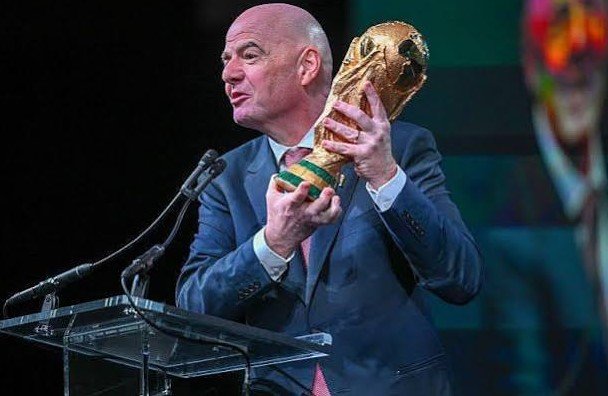
The Union of European Football Associations (UEFA) has threatened to boycott future FIFA competitions, including the 2030 FIFA World Cup, if FIFA President Gianni Infantino proceeds with plans to sell a stake in the World Cup and other FIFA competitions to private investors.
The decision followed an emergency meeting of UEFA’s 55 member associations, where delegates unanimously rejected the proposal, describing it as a direct threat to the future governance and integrity of world football.
According to UEFA, FIFA has given national football associations until September 19 to approve the investment proposal, offering each association an incentive of $40 million (£30.1 million) in exchange for supporting the plan.

In a strongly worded statement, UEFA declared that no European national team would participate in FIFA competitions for as long as the proposal remained in place.
“UEFA and its 55 member associations stand united. We unanimously reject FIFA’s proposal to transfer ownership interests in the World Cup and other FIFA competitions to private investors,” the statement said.
The European football governing body argued that the FIFA World Cup is part of football’s global heritage and should never be treated as a commercial asset.
“The World Cup cannot be treated as an investment product. It is one of football’s greatest sporting legacies, built over generations by players, national teams and supporters across every continent. It is not for sale,” UEFA stated.
UEFA also criticised FIFA for allegedly developing the proposal without meaningful consultation with stakeholders, describing the process as a failure of leadership and an abandonment of FIFA’s responsibility as the custodian of world football.
The organisation warned that allowing private investors to acquire ownership stakes in FIFA competitions would fundamentally change the game by placing commercial interests ahead of sporting values.
According to UEFA, once investors become shareholders, decisions affecting the international calendar, tournament formats and the future direction of football would increasingly be driven by financial returns rather than the interests of players, fans, clubs and national associations.
UEFA further accused FIFA of presenting member associations with an ultimatum, arguing that the governing body was attempting to force through a decision with long-term consequences for global football.
The statement concluded by insisting that Europe would not support any move to privatise the World Cup, warning that UEFA’s member associations would continue opposing the proposal unless it was completely withdrawn and FIFA provided binding guarantees that its competitions would never be opened to private ownership.
The dispute marks one of the most significant confrontations between UEFA and FIFA in recent years and raises uncertainty over the future of international football should the proposal proceed.