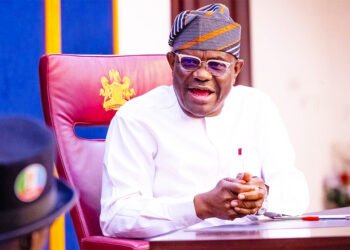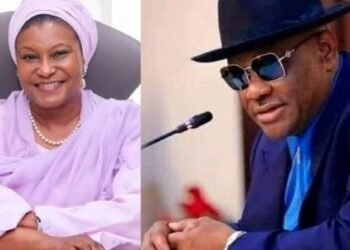



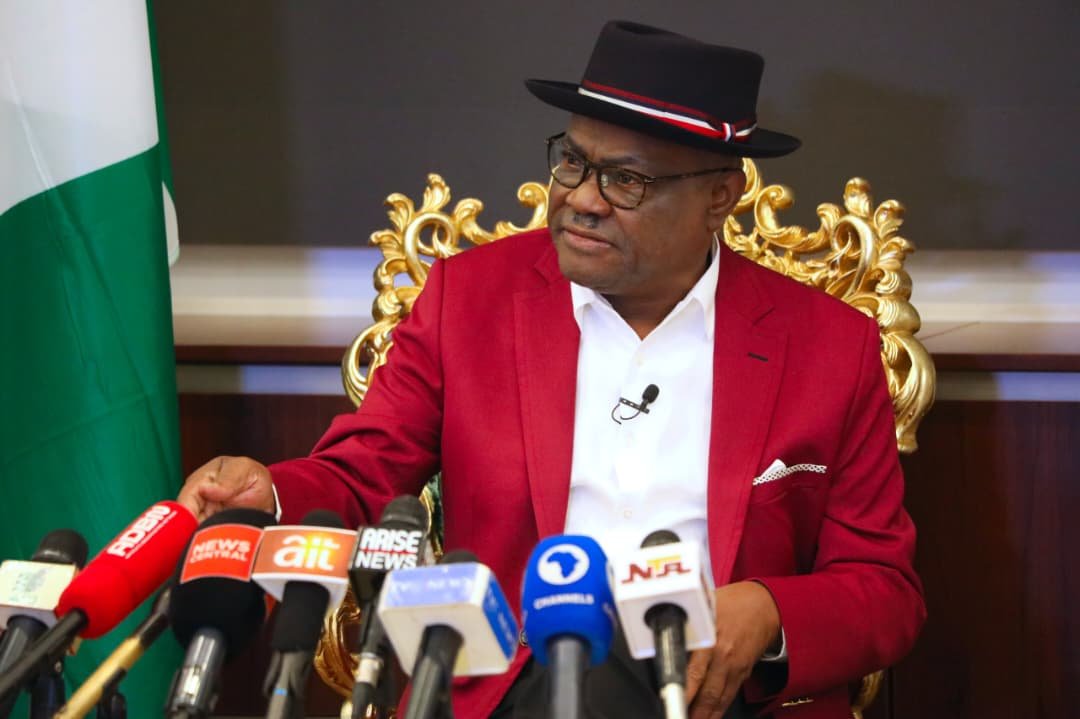
Minister of the Federal Capital Territory (FCT), Nyesom Wike, has downplayed the political clout of former Minister of Transportation, Rotimi Amaechi, asserting that the former Rivers State governor lacks substantial electoral backing in both Rivers State and the broader South-South region.
During a media briefing in Abuja on Tuesday, Wike contended that despite holding key leadership roles in several presidential campaigns, Amaechi has not shown the political prowess necessary to sway national elections.
According to Wike, the decision to consider Amaechi for the vice-presidential candidacy likely stems from reasons other than his vote-drawing capabilities. He pointed out past presidential elections where Amaechi’s prominent involvement did not lead to decisive victories.

Citing examples from the 2015 and 2019 general elections, where Amaechi served as Director-General for Muhammadu Buhari’s campaigns, as well as the 2023 election supporting former Vice President Atiku Abubakar, Wike argued that electoral outcomes in Rivers State did not match the influence often attributed to Amaechi.
Challenges on Federal Contributions
Wike questioned the impact of Amaechi’s tenure in the Federal Government on Rivers State and the South-South region, asking for notable developmental achievements under his leadership.
He also accused the former minister of political inconsistency, claiming Amaechi criticized the All Progressives Congress (APC) primary election process but later accepted it when favorable.
Wike described it as contradictory to label an election process flawed while eventually benefiting from it.
2015 Political Reverberations
The FCT minister touched on Amaechi’s involvement in former President Goodluck Jonathan’s 2015 electoral defeat, suggesting that many in the South-South remember the political dynamics of Jonathan’s failed re-election attempt.
Wike expressed doubts about the region’s willingness to support Amaechi for future national positions given his past actions.
Increased Federal Focus on Rivers
Wike concluded by underscoring increased federal attention to Rivers State under the current administration. He highlighted major infrastructure projects, like the ongoing Bonny Road project, emphasizing that the state is receiving more federal support than at any time since democracy’s return in 1999.