






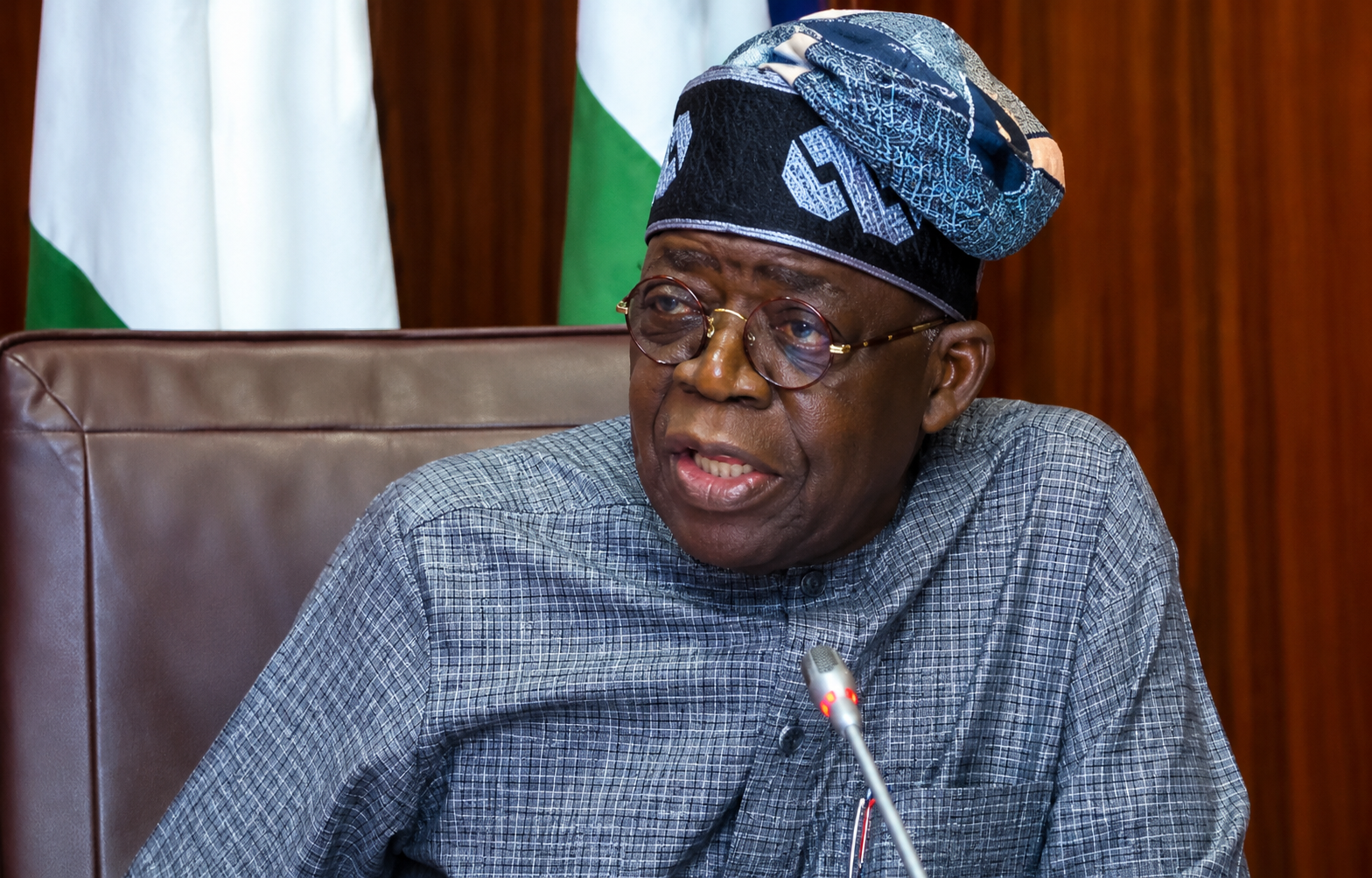
The Presidency has refuted claims that President Bola Ahmed Tinubu is involved in a criminal case in the United States, clarifying that the issue currently before a US federal court pertains to a civil matter regarding access to government records.
Bayo Onanuga, the Special Adviser to the President on Information and Strategy, provided this clarification in a statement released on Thursday.
Onanuga stated that the case in question, which is being heard in the United States District Court for the District of Columbia, originated from Freedom of Information Act (FOIA) requests aimed at obtaining records related to Tinubu.
He noted that these requests were made in 2022 by Aaron Greenspan to various US government agencies.
The Presidency further explained that after some agencies chose to withhold specific information or refused to confirm the existence of certain records, Greenspan initiated Civil Action No. 23-1816 in federal court in 2023.
The court subsequently permitted Tinubu to join the proceedings as an intervenor.
Onanuga emphasized that this legal action should not be misconstrued as a criminal prosecution against the Nigerian President.
“To clarify, this matter is a civil dispute regarding records disclosure under the United States Freedom of Information Act. It does not constitute a criminal case against President Bola Ahmed Tinubu, nor has the court determined that he has committed any criminal offenses,” he stated.
The Presidency also referred to a letter dated February 4, 2003, from the American Consulate in Lagos to then Inspector-General of Police Tafa Balogun. The letter indicated that an FBI records check revealed no criminal arrest records, wants, or warrants for Tinubu, who was serving as the governor of Lagos State at that time.
Onanuga further elaborated that several US agencies initially invoked the “Glomar defense,” which allows government entities to neither confirm nor deny the existence of certain investigative records.
The court later issued a summary judgment in favor of the CIA, the Executive Office for United States Attorneys, the Department of State, and the Department…
The outstanding matters pertain to records maintained by the FBI and the Drug Enforcement Administration.
As stated by the Presidency, these two agencies have generated 399 pages of records, although certain sections were redacted in accordance with exemptions specified in US law.
The plaintiff has contested some of these redactions, while the FBI and DEA, represented by the US Department of Justice, have resisted requests for additional disclosure.
The agencies have reportedly contended that certain information is legally protected, including details related to grand jury proceedings and information safeguarded by the Pen Register Act.
Additional justifications cited include attorney-client and attorney-work-product privileges, law enforcement exemptions, protections for personal privacy, confidential sources, and investigative methods.
Onanuga indicated that Tinubu, following legal counsel, has also invoked his rights under FOIA Exemption 7(C), which pertains to the safeguarding of personal privacy in specific law enforcement records.
The Presidency noted that the plaintiff has until September 11, 2026, to submit an opposition and reply, while the FBI, DEA, and Tinubu have until September 18 to respond to any filings made.
Onanuga stressed that the release or withholding of government records under FOIA does not inherently imply criminal liability.
He stated that the resolution of this matter will ultimately be determined by Judge Beryl A. Howell, based on the evidence, relevant US law, and the arguments put forth by the involved parties.
Consequently, the Presidency urged Nigerian media organizations and the public to differentiate between the ongoing civil litigation and the political interpretations associated with the case.