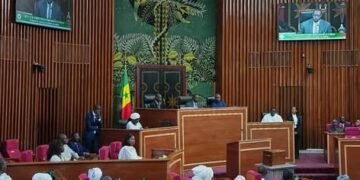








Senegal’s agreement with the International Monetary Fund (IMF) has triggered heated debate in the country’s National Assembly, with opposition lawmakers questioning the government’s decision to enter into a new financing arrangement with the global lender.
Prime Minister Ahmadou Al Aminou Mohamed Lo defended the agreement on Tuesday while presenting the government’s general policy statement to lawmakers.
The deal involves a three-year programme valued at approximately $2.2 billion, which the government says will help Senegal address its financial difficulties and restructure its debt obligations.
Lo argued that Senegal could not simply avoid the IMF if the country needed its support, describing the institution as the body authorised to assess a country’s macroeconomic position and debt sustainability.
His defence, however, drew strong criticism from lawmakers opposed to President Bassirou Diomaye Faye’s administration and its Kiiray political platform.
PASTEF lawmaker Guy Marius Sagna accused the government of compromising Senegal’s sovereignty through its relationship with the IMF.
Sagna argued that the country risked becoming too dependent on the international financial institution and criticised what he described as the prime minister’s strong defence of the IMF.
Senegal is currently dealing with about $3.5 billion in payment arrears. According to Lo, the new agreement will allow the government to reprofile its debt by extending repayment periods and renegotiating interest rates.
The government is also reviewing approximately 30 mining contracts as part of broader efforts to improve the country’s finances and economic position.
The IMF controversy comes amid growing political tensions between President Faye and his former prime minister, Ousmane Sonko, who now serves as speaker of the National Assembly.
The disagreement between the two former political allies has reportedly extended to several major policy issues, including the government’s IMF programme.